Why Lichen Roots Are More Damaging to Roofs Than Pure Moss
Homeowners across the Sunshine Coast are no strangers to organic roof growth. Our subtropical climate—marked by warm temperatures, high humidity, and heavy seasonal downpours—creates the perfect environment for organisms like moss and lichen to thrive. While thick, green moss carpets often look more alarming from the street, it is actually the flatter, crust-like lichen that causes far more permanent structural damage to roofing materials.
Understanding the biological differences between moss and lichen, as well as how their rooting systems interact with roof substrates, is critical for protecting the longevity and value of your Sunshine Coast home.
Moss vs. Lichen: The Biological Difference
Although they often share the same damp, shaded areas of a roof, moss and lichen are fundamentally different organisms:
Moss is a simple, non-vascular plant. It absorbs water and nutrients directly through its leaves from rainwater and ambient air. Because it lacks a true root system, moss anchors itself using tiny hair-like structures called rhizoids. These rhizoids exist primarily to keep the plant anchored in place rather than to draw nutrients from deep within the substrate.
Lichen, on the other hand, is not a single plant. It is a complex symbiotic organism formed by a fungus and an alga (or cyanobacterium). The fungal partner creates a structural matrix, while the alga produces food through photosynthesis. Rather than simple surface anchors, lichens produce dense fungal filaments and root-like structures called rhizines that burrow into and bond intimately with the roof surface.
How Lichen Rhizines Cause Severe Roof Deterioration
While moss mainly poses a risk by holding excess water against tiles—which can lead to moisture ingress and wood rot under the battens—lichen destroys the roofing material itself. Lichen causes direct structural degradation in two primary ways: mechanical anchoring and chemical etching.
1. Mechanical Penetration and Micro-Cracking
Lichen rhizines do not simply sit atop your roof; they embed themselves into the microscopic pores, pits, and crevices of concrete tiles, terracotta, and protective coatings. As weather patterns on the Sunshine Coast shift between scorching sunshine and heavy rains, the lichen expands when wet and contracts when dry. This continuous hydraulic and thermal movement exerts mechanical tension on the surface, widening tiny micro-fissures into larger cracks and spalling the top layer of tile or Colorbond coating.
2. Chemical Etching and Leaching
Lichen survives by chemically extracting minerals directly from the host material. The fungal component secretes potent biochemicals known as lichenic acids (such as oxalic acid). These acids chemically react with the alkaline minerals in concrete tiles and mortar pointing, dissolving calcium carbonate and silica. Over time, this chemical leaching breaks down the cementitious binder, turning solid tile surfaces into https://eduardofvui109.almoheet-travel.com/how-roof-pitch-affects-cleaning-costs-and-safety-needs powdery, compromised material.
3. Coating and Glaze Stripping
When lichen adheres to painted metal roofs, glazed terracotta, or sealed concrete tiles, its rhizines fuse into the protective paint and sealants. When the lichen dies or is pulled off incorrectly, it takes the paint or protective glaze with it, exposing bare metal to accelerated coastal corrosion or raw concrete to continuous water absorption.
Comparison: Moss Damage vs. Lichen Damage
- Moisture Retention: Moss holds large volumes of water like a sponge, leading to tile dampness and clogged gutters. Lichen holds less overall moisture but traps water directly against deep microscopic fissures.
- Surface Penetration: Moss rhizoids are superficial and rarely penetrate beyond surface grime. Lichen rhizines dig deeply into the substrate material itself.
- Chemical Reaction: Moss is chemically neutral. Lichen actively secretes corrosive acids that dissolve tile binders and metal finishes.
- Removal Impact: Moss can generally be swept or rinsed away with gentle pressure. Lichen is bonded so securely that aggressive removal often strips the tile surface away.
The Danger of Improper Lichen Removal
Because lichen anchors itself so tenaciously, attempting to blast it away with high-pressure water blasting is one of the most destructive mistakes a property owner can make. In 2026, roofing manufacturers consistently caution that high-pressure washing gouges the softened substrate underneath the lichen, voids warranties, and strips away years of roof life in minutes.
Equally, attempting to scrape lichen mechanically will often pull out chunks of concrete or tear the protective finish off Colorbond steel, exposing your roof to rapid deterioration under coastal salt spray.
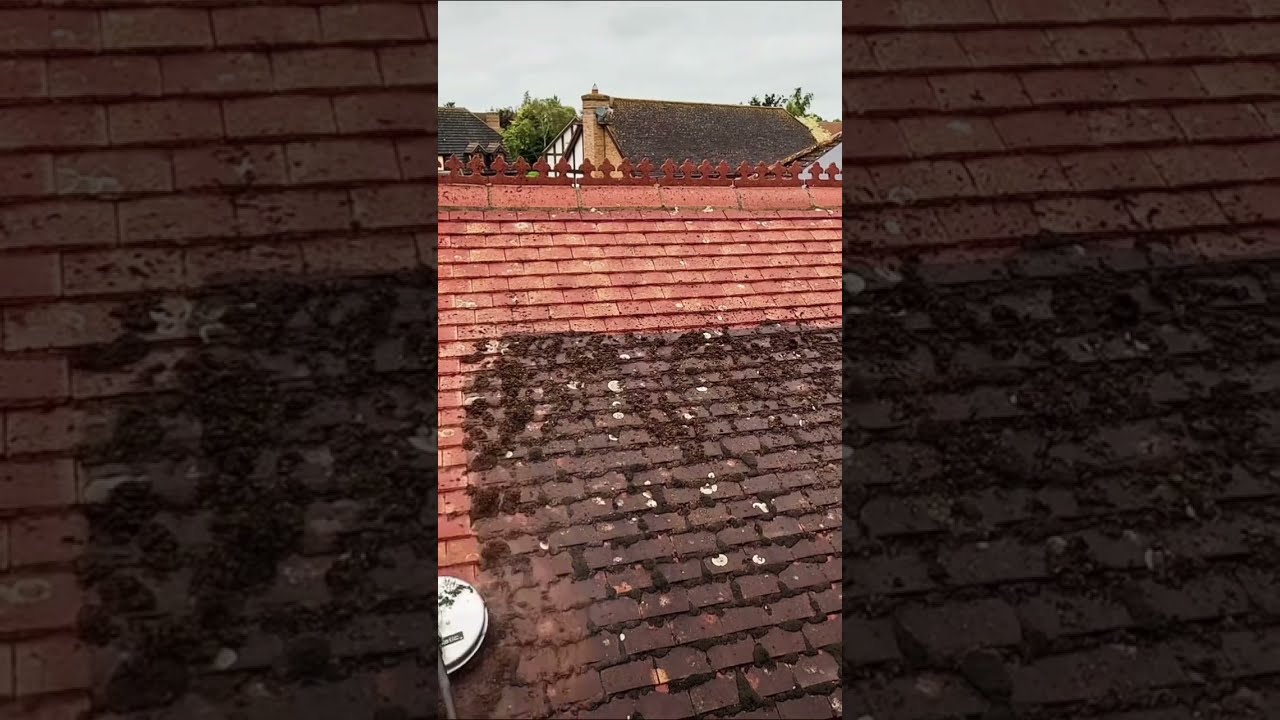
Effective, Safe Lichen Management on the Sunshine Coast
Managing lichen on the Sunshine Coast requires a strategic, chemical approach rather than brute force. The goal is to safely terminate the organism at its root level so that the fungal rhizines naturally decompose and release their grip over time without harming the roof structure.

- Professional Soft Washing: Utilize low-pressure chemical treatments featuring specialized, biodegradable biocides. These formulations soak into the lichen's fungal network and kill the rhizines completely.
- Natural Weathering: Once the biocide neutralizes the organism, the natural cycles of Sunshine Coast rain and sun gradually wash away the dead matter without surface abrasion.
- Protective Resealing: If lichen has previously compromised the protective topcoat of concrete or terracotta tiles, applying a modern high-grade protective membrane seals open pores and prevents future spore colonization.
- Preventative Maintenance: Periodic inspections and biocide wash-downs keep shaded and damp roof elevations free of biological spores before rhizines have the opportunity to embed.
While moss may look like the heavier burden, it is lichen that silently compromises the integrity of your roofing materials. Addressing lichen growth promptly with appropriate soft-washing methods preserves your roof's protective barriers, prevents costly tile replacements, and ensures your home remains resilient in the face of Sunshine Coast weather.
Sunshine Coast Roof Cleaning Pros
Unit 2/47 Enterprise St, Kunda Park QLD 4556, Australia
(07) 4158 6008